
North Brisbane Plastering · Ceilings
Ceiling patching in Chermside: making the repair blend
3 min read · QBCC 15438315
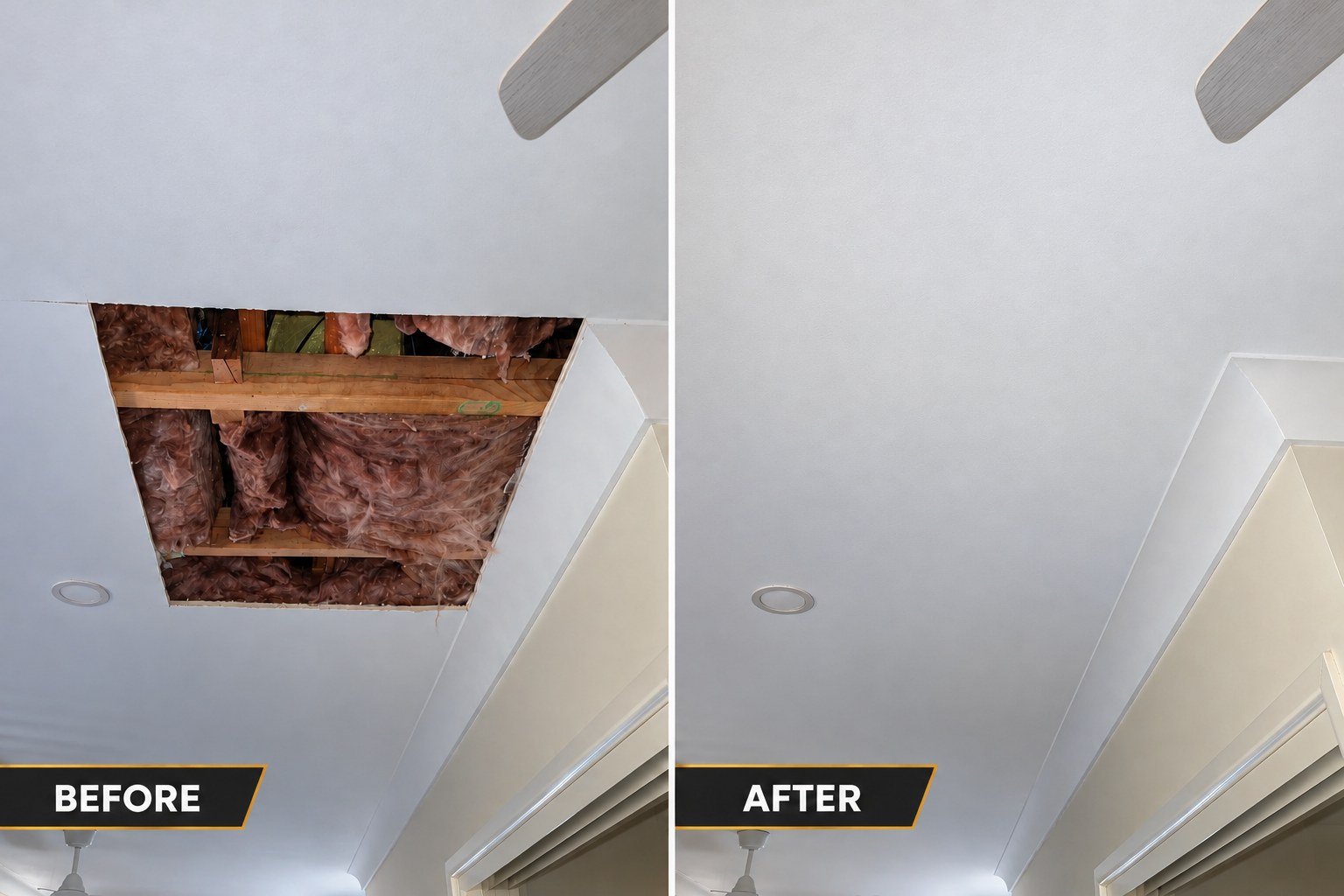
A small opening in a ceiling can be surprisingly noticeable once the room is painted. The repair has to sit in the same plane as the surrounding plasterboard, and its joints need a sound foundation. For homeowners in Chermside, planning ceiling patching is therefore about the condition of the existing lining as well as the size of the hole. North Brisbane Plastering can discuss those details before a repair scope is agreed.
Start with the reason for the opening
An opening left by a moved light fitting is different from damage caused by a leak or a ceiling that is losing support. Before covering the area, establish what happened and whether the cause has been addressed. Electrical work and isolation belong with an appropriately licensed electrician. Staining, soft board or recurring cracks call for further assessment rather than an immediate cosmetic patch.
Photographs showing the whole room, the opening and nearby junctions are useful starting points. Include the position of lights and cornices where possible. Close-ups help show the edges, but they cannot establish the condition of concealed framing or confirm that a lining is safe. An inspection may still be needed.
Give the patch a sound foundation
A repair needs a suitable way to support the replacement board. The existing plasterboard should be checked around the opening so the patch is not attached to loose or weakened material. The replacement board, support and fixings need to suit the existing construction and the selected system. There is no single fixing arrangement that can be assumed appropriate for every ceiling.
Cutting out a neat repair area can be more practical than trying to retain damaged edges. The aim is to create a supported patch with joints that can be finished correctly. Required movement joints must not be covered or bridged simply to make the surface look continuous.
Plan joint finishing and painting together
Joint treatment is part of the repair, not an optional cover over the hole. Suitable tape and compounds need to be used in accordance with their instructions, including the necessary setting or drying stages. Rushing those stages can compromise finishing. Sanding should refine the joint without damaging the plasterboard face paper or exposing the tape.
A freshly repaired area can look different after painting because of colour, sheen and texture. Discuss the painting boundary before work starts. Repainting only the patch may not give the same appearance as repainting a larger ceiling area. Strong light across the ceiling can also make small surface variations more visible, so expectations about the finish should be agreed early.
What a useful ceiling patching scope includes
A clear scope should explain the repair area, any removal, the support arrangement, joint finishing and waste handling. It should also state whether painting is included and who is responsible for any service work. In an occupied Chermside home, room access, furniture protection and dust management deserve the same attention as the visible repair.
For a loose or visibly sagging ceiling, keep clear of the affected area and arrange prompt assessment. A patch is not a substitute for resolving an unsafe lining. For ordinary repair planning, see our ceiling repairs in North Brisbane, view genuine plastering work, or request a quote with photographs and a description of the existing condition.